Our Services
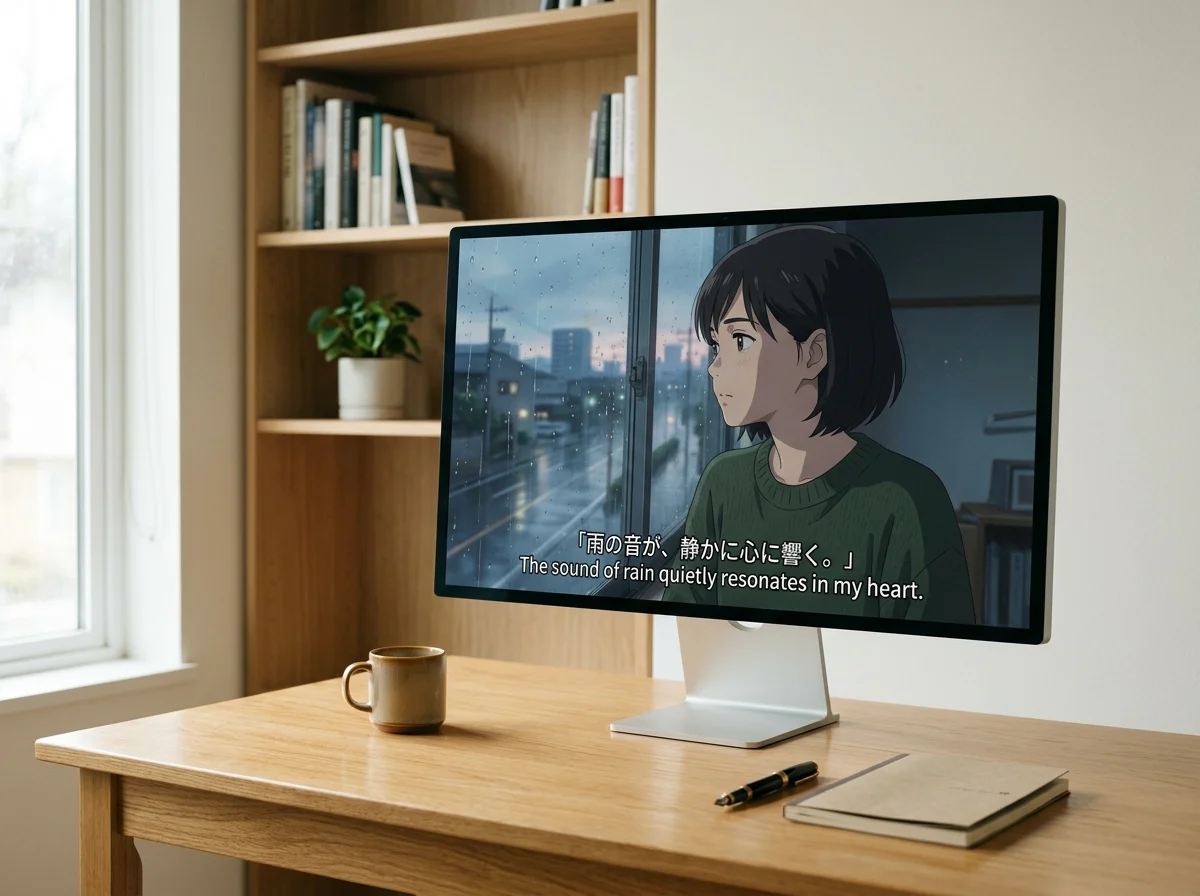
Localising subtitles isn’t just about good translation. It's about matching the tone and rhythm of the original while making the dialogue feel natural in English, and ensuring the words never compete with the visual story on screen. The best subtitles go unnoticed, appearing and disappearing so smoothly that we barely register we're reading at all. A miss-placed subtitle or an awkward line break can ruin the viewing experience, shaking us out of the story in which we are immersed.
Every subtitle file we deliver comes with translator's notes. Where a joke has been reworked, a name has been adapted, or a line has been rephrased to sound natural in English, we explain what we changed and why. This means producers and reviewers in Japan, or anyone whose first language isn't English, can check our work with confidence and see exactly how the original meaning has been carried across. It also makes the feedback process faster and clearer, as every decision is already documented and easy to discuss.
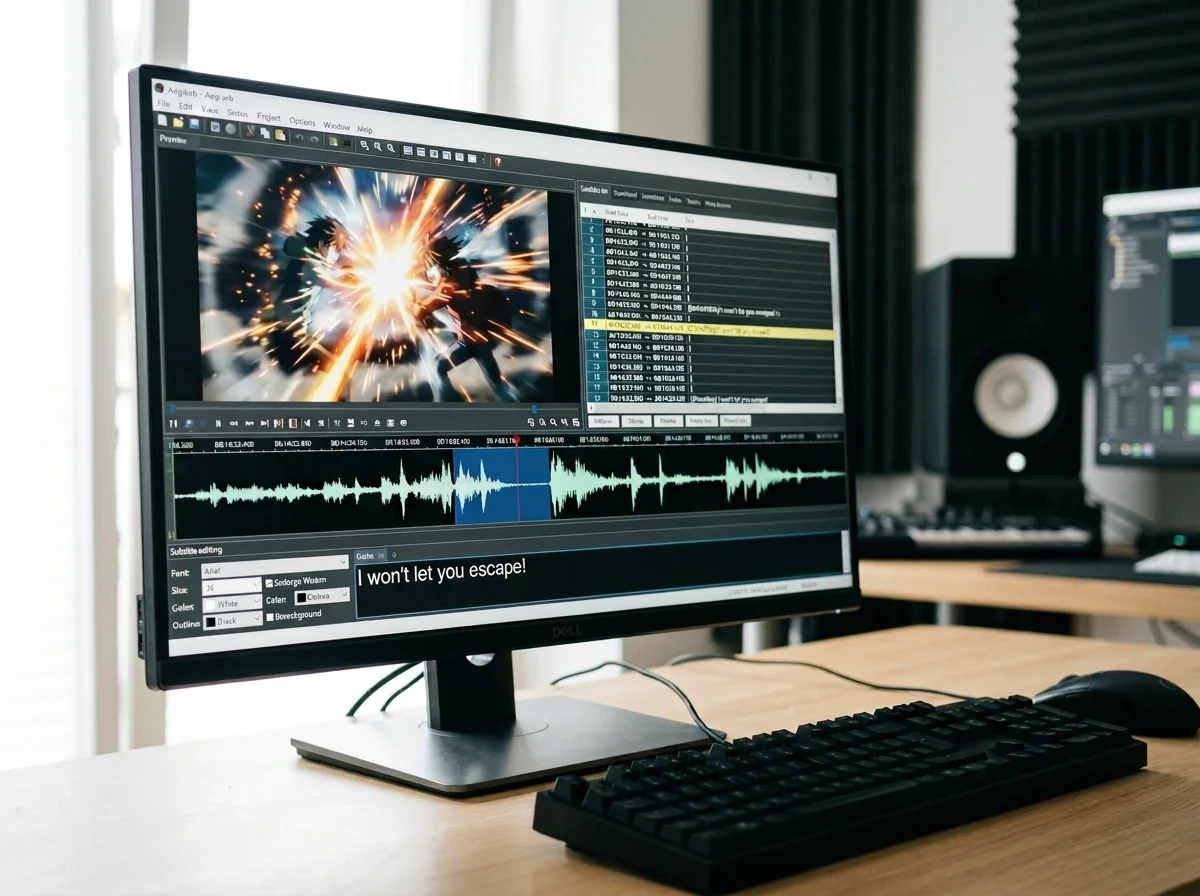
Subtitles need to be timed smoothly around shot changes and positioned carefully so they never block important visuals. When on-screen text, a character's face or key action sits at the bottom of the frame, we move the subtitle to the top so viewers don't miss anything. Timing follows its own set of rules. Each subtitle must stay on screen long enough to be read comfortably, but not so long that it lingers after the line has been spoken. There should be a small gap of at least two frames between consecutive subtitles, and subtitles should either snap to within two frames of a cut or stay at least half a second clear of it. A subtitle that flickers on just before a shot change, or spills a few frames over into the next scene, is jarring even when viewers can't quite say why.
This is where automated tools often fall short. Timing software detects shot changes by looking for sudden shifts in the image, which means it can't tell the difference between a real cut and a flash of light, an explosion or a burst of fast movement. In an anime, a single action sequence can be full of these false shot changes, and subtitles snapped to them end up appearing too early, disappearing too soon, or breaking awkwardly in the middle of a line. That's why every subtitle shell we create is built and reviewed by a human eye. We check each shot change against the footage, and adjust timings by hand.
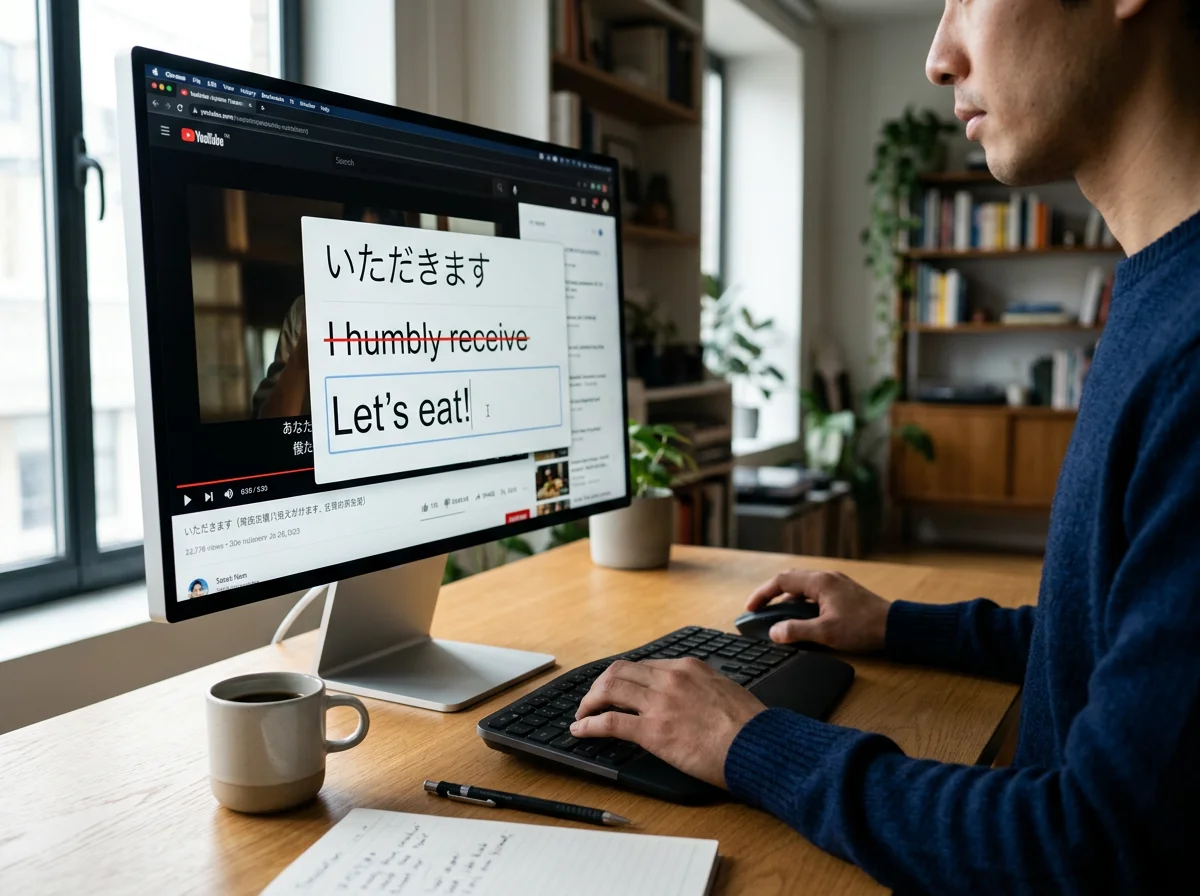
The example above is an exaggeration, but there are many subtler cases where a literal translation from Japanese simply doesn't work in English. As well as carrying out a thorough native check, we discuss with you before the project begins how Japanese you'd like the final translation to feel. Should dishes like 'takoyaki' keep their original names, or become something more familiar, such as 'octopus dumplings'? Should honorifics like '-san' and 'senpai' stay in, or be conveyed through tone instead? Should the English lean British or American, and is the audience children, families or adults?
Some of these choices only become clear as we move through a film or series. Addressing someone as 'owner' isn't natural in English, for example, but you may decide it carries important information about a relationship and prefer to keep it. We record every agreed decision in a project glossary and style sheet, so names, terms and each character's voice stay consistent from the first episode to the last, and across future seasons. We're used to having these conversations with directors and remain flexible throughout, so the final subtitles reflect your vision while reading naturally to an English-speaking audience.
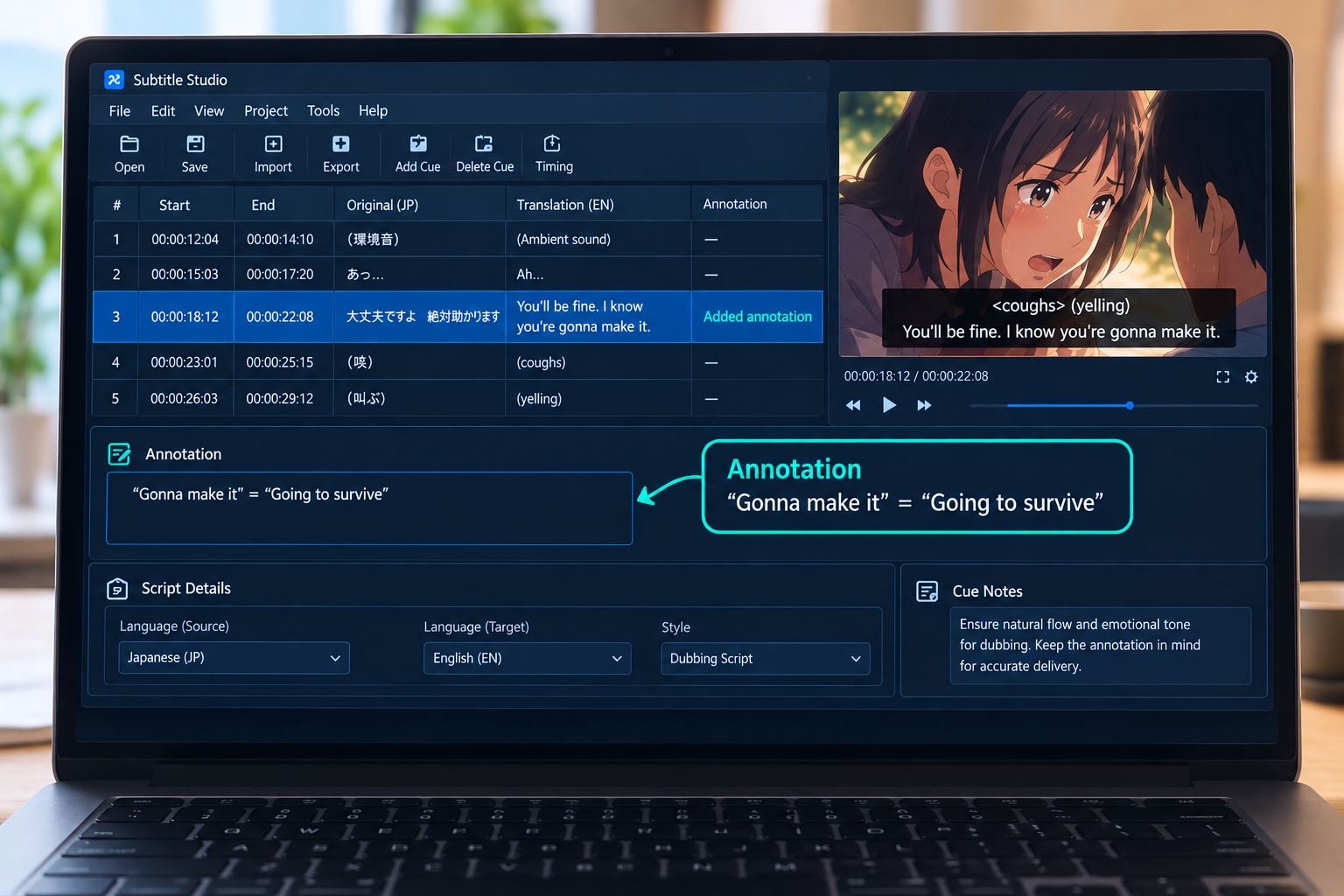
In addition to subtitling, we prepare dubbing scripts ready for voice actors, directors and adaptation teams. Every script identifies each speaker and captures every utterance, from full lines of dialogue to breaths, laughs, sighs and background chatter, so nothing is lost between the original recording and the dubbed version.
Alongside the translation, our scripts include sound and delivery cues that show how a line is spoken as well as what is said. This gives dubbing directors and performers the context they need to recreate the tone and timing of the original performance.
Our scripts are also designed to work as pivot templates. Clear annotations explain wordplay, cultural references, honorifics and any lines where the English departs from the literal Japanese, so linguists translating from our English into other languages can understand the intent behind each choice rather than working from the English alone.